A note before you read
This is an independent learning profile based on public company histories and interviews. It is not a statement by the people or companies featured, and it is not a promise that the same path will work for another venture.
Building an enterprise with other founders
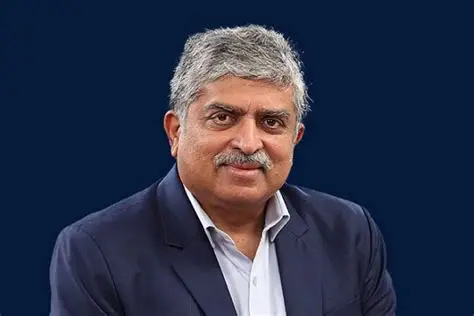
Nandan Nilekani is one of the seven engineers who established Infosys in 1981. The company grew in a period when globally competitive software-services work from India was still being proven to customers. That required more than technical skill: it required an organization that could hire, train, coordinate, communicate, and deliver across distance. Nilekani later served as Infosys’s CEO before moving into public service, according to the company’s management profile.
The lesson for early founders is that capabilities compound. A first customer project can teach a team about process; a repeatable process can make the next project safer; and the organization can then take on work it could not have handled at the start. But compounding only helps when the company captures what it learns. Write down the workflow, surface mistakes, and make quality less dependent on one person’s memory.
A move from company building to public infrastructure
From 2009 to 2014, Nilekani was the founding chairperson of India’s Unique Identification Authority (UIDAI), which led the Aadhaar identity programme. He later co-founded EkStep Foundation, a nonprofit focused on technology-enabled foundational literacy and numeracy. These roles differ sharply from selling a service to a private customer: public infrastructure touches people at national scale, and education systems involve children, teachers, communities, and institutions.
A large digital system can expand access and reduce friction, but scale also amplifies the consequences of design choices. Questions about inclusion, privacy, reliability, grievance processes, and accountability belong in the product conversation from the beginning. The history should not be told as if reach alone settles those questions. Nilekani’s path is useful precisely because it shows how a founder’s work can move between sectors where the affected people and obligations are different.
The next chapter is a different problem, not just a bigger one
EkStep’s origin account describes a learning initiative intended to help children improve foundational literacy and numeracy through technology. Education is not simply a distribution challenge. A tool can reach a school and still fail to fit a teacher’s day, a child’s language, local connectivity, or the way progress is assessed. A responsible education venture must check whether the tool helps learning in the conditions where it will actually be used.
This is a useful warning against reusing a successful playbook without redesign. A team may carry hard-won knowledge from one company into a new setting, but the people affected, measures of success, and risks may all change. The founder’s job is not to insist that the old approach fits; it is to listen, test, and adapt the institution around the new problem.
What a WEEFUND creator can take from this story
When your project is meant to serve a broad public, describe not only how many people could use it but also who could be left out. Test with the people most affected, design a clear route for complaints, and measure outcomes rather than sign-ups alone. If the work touches identity, money, health, education, or essential services, explain privacy, safety, and oversight in plain language.
A founder’s previous success can be a source of skill, not proof that a new idea will work. Start the new chapter with fresh evidence. Define the user, context, smallest safe test, and the signals that would make you pause or change course. Systems earn trust not just by reaching people, but by remaining understandable and accountable to them.
A few public milestones
The timeline, in brief
- 1981
Nilekani joins six fellow engineers and N. R. Narayana Murthy in establishing Infosys.
- 2002–07
He serves as Infosys CEO before transitioning from the role.
- 2009–14
He serves as founding chairperson of UIDAI.
- Later chapter
He co-founds EkStep Foundation, focused on technology-enabled foundational learning.
For the work in front of you
Three ideas worth carrying forward
Redesign for each context
Experience transfers, but customer needs, public obligations, and failure modes do not stay the same.
Measure outcomes, not just reach
A download, registration, or deployment is not proof that a service helped its intended users.
Put accountability in the design
Explain how people can get help, challenge an error, protect their information, and understand who is responsible.
Research notes
Where this profile draws from
- Infosys, Nandan M. Nilekani management profile: co-founder, CEO, UIDAI, EkStep, and education initiative background.
- EkStep Foundation, ‘Origin story’: the foundation’s account of its learning mission.
- WEEFUND’s discussion of inclusion and accountability is editorial analysis; it is not a statement by Nilekani, Infosys, UIDAI, or EkStep.
These source titles are included for transparency; the reading experience stays on WEEFUND. Opinions, comparisons, and lessons are the editorial interpretation of WEEFUND.