A note before you read
This is an independent learning profile based on public company histories and interviews. It is not a statement by the people or companies featured, and it is not a promise that the same path will work for another venture.
A specialist’s skills meet an unexpected opening
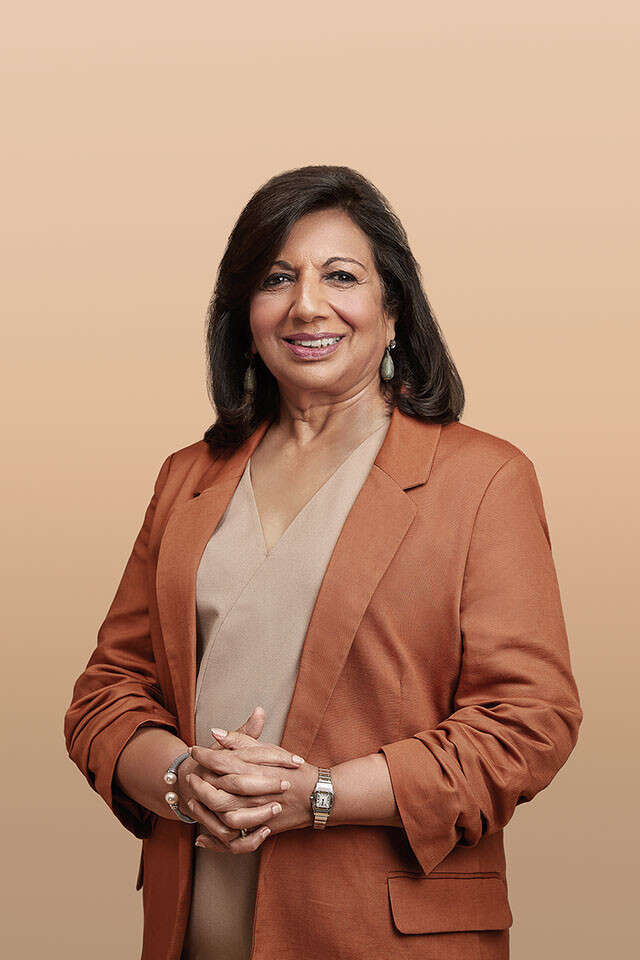
Kiran Mazumdar-Shaw trained in malting and brewing, a highly specific discipline. In 1978, a conversation with Irish enzyme company Biocon Biochemicals led to a joint venture in India. The first operation was modest: a rented shed in Bengaluru, three employees, and work focused on enzymes used in brewing and food processing. Biocon’s company history records papain, an enzyme derived from papaya, and isinglass among its early products.
This origin is often shortened to a tidy ‘garage startup’ story. The more useful detail is the fit between what the founder knew and what the business needed. Fermentation science gave Mazumdar-Shaw a technical base; the partnership supplied an initial route into a specialized market. It was not yet the global biopharmaceutical company people recognize today. That transformation happened over many years, with new capabilities, facilities, research, and products built in stages.
Build credibility one proof point at a time
Biocon’s chronology records its first papain export in 1979, followed by investment in a dedicated Bengaluru site in 1980. Those early moves mattered because they converted an idea into evidence: the team could make a product, meet a buyer’s requirements, and begin to expand beyond its first rented premises. A young company in a field unfamiliar to many customers and financiers has to do more than describe its ambition. It has to make quality and reliability visible.
Mazumdar-Shaw has spoken about the barriers she encountered as a woman entering brewing and biotechnology. Harvard Business School’s Creating Emerging Markets oral history captures her account in her own words. That perspective complicates the myth that good ideas are judged only on merit: access, credibility, and who gets assumed competent all shape a founder’s early path. The lesson is not that obstacles automatically produce success. It is that founders may need to design a deliberate plan for earning trust when the market does not grant it at the start.
The long transition from an enzyme business to biotechnology
Biocon’s later direction moved far beyond its first industrial-enzyme products. Building a biotechnology and biopharmaceutical company means investing in science, specialized infrastructure, quality systems, regulation, and long development timelines. Those constraints do not fit the familiar software-startup story of shipping a quick feature and iterating weekly. The company’s path shows that the operating rhythm must match the work: the cost of evidence, the time needed to produce it, and the consequences of getting it wrong.
The company describes its focus as developing medicines and improving affordability and access. That is Biocon’s stated purpose, not a guarantee that every product or healthcare system will deliver the same outcome. For a founder, a mission becomes more credible when it is attached to measurable work—what is being developed, which patients or customers it is for, what evidence is required, and what remains uncertain.
What a WEEFUND creator can take from this story
Start with the capability you genuinely have, then name the capability you still need. A technically strong idea may require manufacturing, compliance, distribution, clinical evidence, or a partner before it can reach the people it is meant to serve. Explain those dependencies plainly. Supporters are more likely to trust a realistic plan than a promise that skips the hard parts.
Also make progress legible. A small team can show a prototype, a quality test, a customer conversation, a supplier quote, or a first paid order. State the date, sample size, and limits of the evidence. Mazumdar-Shaw’s biography is not a template for guaranteed success; it is a reminder that credibility in a demanding field is accumulated through work that others can inspect.
A few public milestones
The timeline, in brief
- 1978
Biocon India is established as a joint venture; initial work begins in a rented shed in Bengaluru.
- 1979
Biocon records its first papain export to the United States and Europe.
- 1980–81
The company acquires a Bengaluru site and begins building a permanent operating base.
For the work in front of you
Three ideas worth carrying forward
Let expertise shape the first wedge
A narrow, well-understood first product can be a more credible start than a broad promise.
Treat trust as operational work
Quality, documentation, and repeatability are part of the product—especially in regulated or technical markets.
Show the real timeline
Long research and infrastructure cycles should be explained, budgeted, and communicated—not hidden behind optimistic dates.
Research notes
Where this profile draws from
- Biocon, ‘Our Legacy’ and company history: founding, early products, first export, and Bengaluru site milestones.
- Biocon, Kiran Mazumdar-Shaw leadership profile: professional background and company role.
- Harvard Business School, Creating Emerging Markets oral history: Kiran Mazumdar-Shaw interview on her entrepreneurial journey and barriers faced.
These source titles are included for transparency; the reading experience stays on WEEFUND. Opinions, comparisons, and lessons are the editorial interpretation of WEEFUND.